
For stamp collectors
A catalog for your stamp collection
Describe every stamp so that you can find it and swap it: the country and the year of the issue, the series, the catalog number, the perforation and the condition. Mark duplicates, keep a photo of each stamp, and share the collection with other philatelists.
The Stamps template has fields for the country, the issue, the catalog number, the topic, the perforation, the printing method and the condition, and a mark for duplicates. You can change everything afterwards.
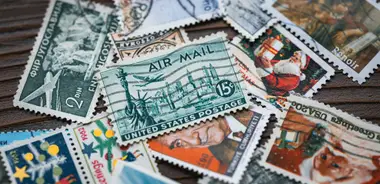
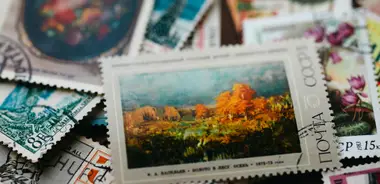
What to keep
What to record about a stamp
These are the fields of the Stamps template, the facts that philatelists use to tell one stamp from another.
-
Country and year of issue
The base of every record, and the way a collection is usually arranged.
-
Series or issue and denomination
Puts a stamp into its set and shows what you have of the set.
-
Catalog number
The number in the catalog you use (Michel, Scott, Stanley Gibbons, Yvert et Tellier or a national one).
-
Topic
Animals, space, transport, art and so on, for those who collect by topic.
-
Format and color
A single stamp, a block, a sheet or a souvenir sheet, and the main color.
-
Perforation and printing method
The details that separate varieties of one stamp.
-
Condition
Mint never hinged, mint hinged, mint without gum, used or cancelled to order.
-
Duplicate, purchase and estimated value
A yes or no for a duplicate that you can swap, what you paid and what the stamp is worth now.
How it works
Your first stamp in three steps
-
Create a collection from the template
Pick “Stamps” when you create a collection. The fields and the lists of countries, topics and conditions are ready.
-
Add stamps with photos
Write the country, the year and the catalog number, set the condition and add a scan or a photo.
-
Search, filter, share
Filter by country, topic or condition, find all the duplicates in one click, and publish the collection in the Gallery.
A short guide
How to describe a stamp collection well
A stamp is small, and a mistake in its description is easy to make. A fixed way of writing prevents most of them.
-
Start with the country and the year of issue
Almost every collection is arranged that way, and a record that begins with these two is easy to place.
-
Write the catalog number in the same form
Choose one catalog and write the numbers exactly as it prints them. Another collector can then find the same stamp.
-
Describe the condition with the standard terms
Mint never hinged, mint hinged, mint without gum, used, cancelled to order. The condition decides much of the price.
-
Note the perforation and the printing method
Two copies of a stamp that look the same can be different varieties. A perforation of 11 and a perforation of 12 are not the same stamp.
-
Mark duplicates
A yes or no field “Duplicate” gives you a list for swaps in one filter.
-
Scan or photograph at a high resolution
A scan shows the print and the perforation. Keep the file with the record, not in a folder you will lose.
FAQ
Questions about this catalog
Which catalogs can I use for the numbers?
Any. The catalog number is a text field, so you can write Michel, Scott, Stanley Gibbons, Yvert et Tellier or a national catalog, and add a second field if you use two.
How do I find my duplicates for a swap?
The template has a yes or no field “Duplicate”. Filter the catalog by it and you have the list.
Can I keep blocks, sheets and sets?
Yes. The format is a list, and the series or issue is a field, so a set and its stamps stay together. You can add values to the lists.
Can other collectors see my stamps?
Only if you publish the collection. You choose which stamps and which fields are public.
Other collections
The same app, other fields: pick the one that fits your hobby.
See collections of other people
Owners publish their collections in the Gallery: look at how they describe their items, then publish your own.
Open the Gallery